An evidence-based environmental and public-health article examining reported arsenic concerns along the Mekong River in Nong Khai province, Thailand.Reports of elevated arsenic levels in urine among residents of Thailand’s Nong Khai province have raised concerns about potential environmental exposure along the Mekong River. The situation has also drawn attention to local fishing livelihoods, agricultural water use, food safety and the need for stronger environmental monitoring.According to the report you shared, 17 residents were referred for further health examinations after urine testing detected total arsenic concentrations above the reference level. Meanwhile, fishermen are reporting declining catches and sales, and some fish have reportedly exhibited visible lesions, although their cause has not been established.Elevated urinary arsenic is a health signal requiring investigation, but it does not by itself establish the source of exposure, the severity of poisoning, or that river water or fish are contaminated.
1. Health screening raises concerns:
Thailand’s Department of Disease Control conducted health-risk screening in parts of Nong Khai, including Hat Kham and Hin Ngom subdistricts and surrounding areas.According to reporting by The Nation and Khaosod English:- 1,644 people underwent screening and risk assessments.- 177 residents were selected for urine testing based on their moderate-to-high risk assessment.- 17 individuals had total urinary arsenic levels exceeding the reported reference threshold of 100 micrograms per litre (µg/L).- All 17 were referred to Nong Khai Hospital for further medical assessment, including complete blood counts and liver-function tests.These referrals represent precautionary medical follow-up, not confirmation that all 17 individuals have arsenic poisoning or arsenic-related disease.
2. Arsenic detected in Mekong water samples:
Environmental monitoring adds to the concern. September 2026 monitoring attributed to Environment and Pollution Control Office 9, Udon Thani, reported the following arsenic concentrations in the Mekong River:
Monitoring Location — Arsenic Concentration•
Sangkhom District. : 0.011 mg/L
• Mueang Nong Khai. : 0.010 mg/L
• Phon Phisai District. : 0.012 mg/
LReference Standard (cited in the report): 0.010 mg/L
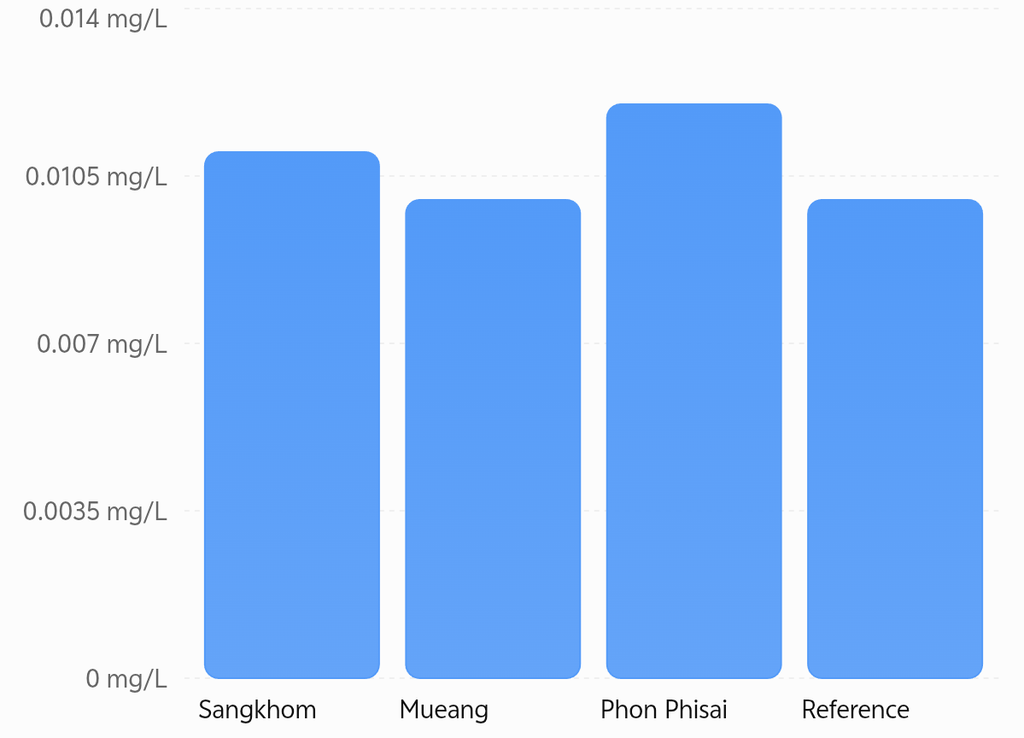
September 2026 measurements reported by The Nation. The chart compares the reported values with the cited reference standard.
The reported concentrations in Sangkhom and Phon Phisai were above the 0.010 mg/L benchmark, while Mueang Nong Khai was at that level.The 0.010 mg/L benchmark is also the World Health Organization’s guideline value for arsenic in drinking water. However, a guideline for drinking water should not automatically be interpreted as a standard for every type of river-water use or as proof of a health outcome from a particular measurement.
3. Fishermen report declining catches and market confidence:
The contamination concerns are also affecting livelihoods.Fishermen along the Mekong in Nong Khai have reported declining catches, lower sales and growing uncertainty about the safety of fish harvested from the river. Some consumers reportedly have become reluctant to purchase Mekong fish following news of arsenic detection.A local fisherman, Khamfai Saisutta, reportedly described observing lumps and lesions on pla khae, a catfish species, and said he had noticed abnormalities over several years. He also reported changes in catches and declining market demand.
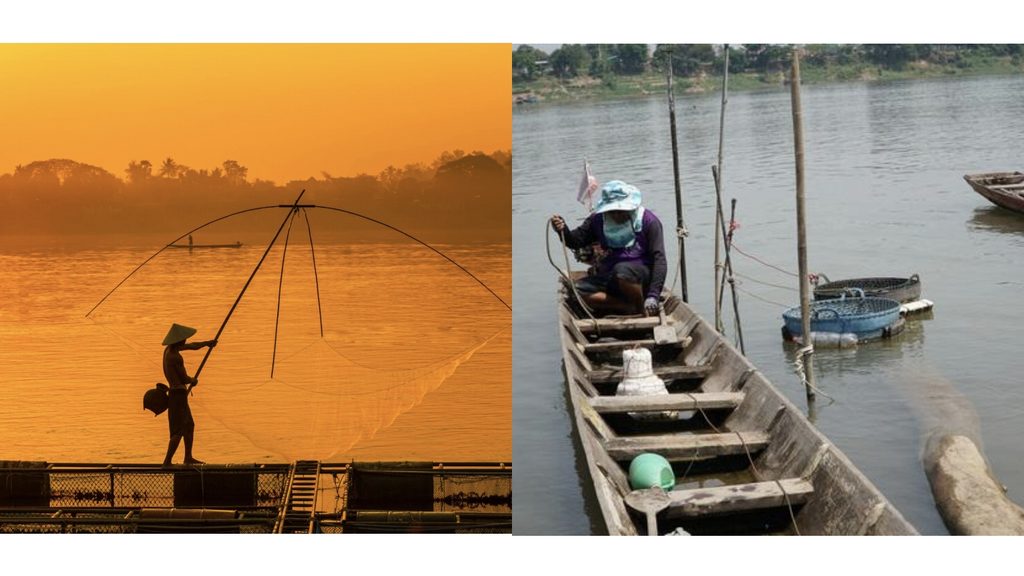
Illustrative imagery of Mekong fishing communities, not photographs verified to depict the specific reported cases.
Are the fish lesions caused by arsenic?There is currently no confirmed causal evidence in the reports reviewed establishing that arsenic contamination caused the observed fish lesions.Fish abnormalities may be associated with a range of factors, including pathogens, parasites, environmental stress, other pollutants, nutritional conditions or combinations of stressors. Proper diagnosis requires fish-health examination, histopathology, microbiological analysis and environmental assessment.The reported observations warrant scientific investigation but should not be presented as confirmed evidence of arsenic-induced disease.
5. Farmers face uncertainty over irrigation water:
The concerns extend beyond drinking water and fish consumption. Agricultural communities in Nong Khai reportedly pump Mekong water directly onto their fields to grow crops, including maize, chilli and tobacco.Farmers interviewed in the report expressed uncertainty about whether they should continue their usual irrigation practices and whether the water could affect crops, soils or agricultural products.
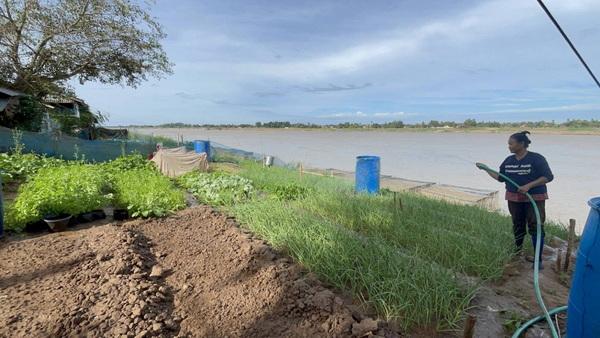
Arsenic in irrigation water can potentially enter agricultural soils and affect food production, depending on the concentration, soil properties, irrigation frequency, crop type and chemical conditions. Repeated application can contribute to soil accumulation and crop uptake.WHO specifically identifies contaminated water used for irrigation of food crops as a potential public-health exposure pathway. However, the risks in Nong Khai cannot be quantified without testing irrigation water, agricultural soils and relevant crops.
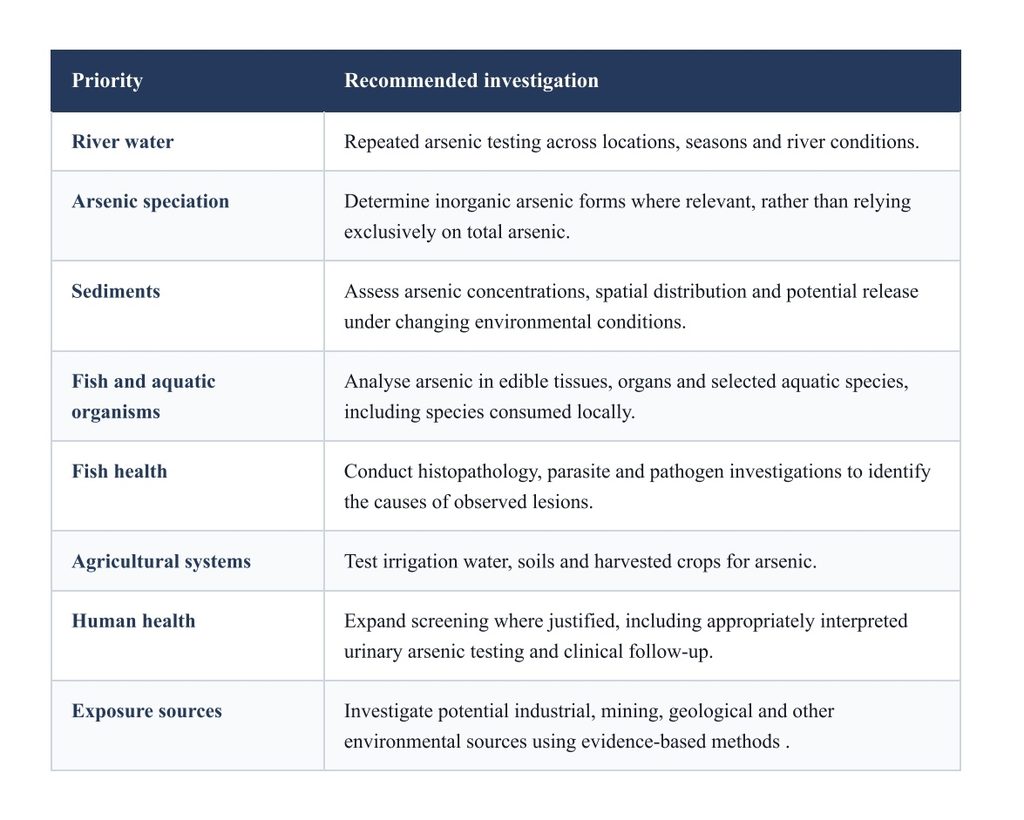
6. What investigations should be prioritised?
A coordinated environmental and public-health investigation is needed before conclusions are drawn about the source, extent or consequences of contamination.
7. The importance of transparent public communication:
For communities whose livelihoods depend on the Mekong, uncertainty can itself become a serious socioeconomic problem. Even without confirmed contamination of every fish species or agricultural product, reports of environmental contamination can undermine consumer confidence, reduce market demand and affect household incomes.Authorities should communicate findings in accessible language, publish laboratory results and explain what is known, what remains uncertain and what precautionary measures are justified.Any public advisory on fish consumption or irrigation should ideally be supported by direct testing of relevant food products and water sources, rather than generalized assumptions about contamination.The situation in Nong Khai highlights the importance of linking environmental monitoring with community health, fisheries management, agricultural safety and transparent risk communication.The Mekong is not merely a river: it is a source of food, livelihood, agricultural water and cultural identity for millions of people across Southeast Asia. Protecting its environmental quality requires scientific evidence, cross-border cooperation and sustained engagement with the communities that depend on it.
Sources and references:
Primary news reporting and authoritative scientific/public-health references
1. The Nation Thailand — 18 November 2026
Nong Khai refers 17 residents for checks over arsenic levels.
2. Khaosod English — 17 November 2026
Mekong arsenic concerns grow as 17 residents test high.
3. World Health Organization (WHO)Arsenic — Fact sheet.
WHO fact sheetAuthoritative reference on arsenic toxicity, exposure pathways and drinking-water guidance.
4. US Agency for Toxic Substances and Disease Registry (ATSDR)Clinician Brief: Arsenic.ATSDR clinical guidance Clinical interpretation of urinary arsenic testing, including the importance of arsenic speciation and seafood consumption.
5. ATSDR / US Centers for Disease Control and PreventionPublic Health Statement: Arsenic.