An emerging approach to addressing the country’s energy crisis, agricultural land constraints and food security challenges
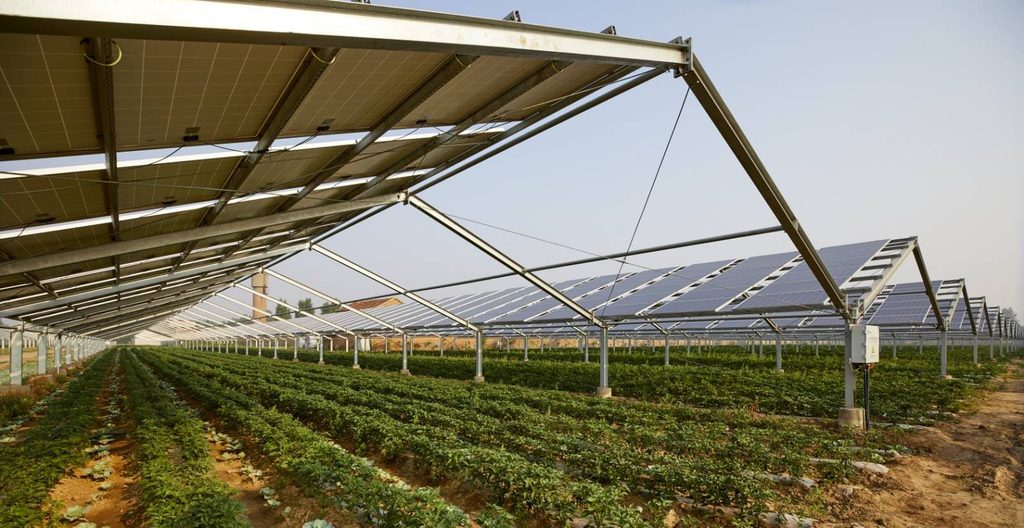
Bangladesh faces a growing challenge in balancing energy security, food production and sustainable land use. Rising electricity demand, dependence on imported fossil fuels, fuel price volatility and pressure on foreign currency reserves have made energy diversification increasingly important. At the same time, agricultural land is under growing pressure from urbanization, industrial development, infrastructure expansion and climate-related risks.Solar energy has emerged as one of the promising alternatives for diversifying Bangladesh’s energy mix. However, large-scale ground-mounted solar power projects often require substantial land, raising concerns in a country where agricultural land is already limited and closely linked to rural livelihoods and national food security.In this context, Agrivoltaics (Agri-PV), a system that combines agricultural production and solar electricity generation on the same land, offers a potentially innovative approach to addressing both challenges simultaneously.Rather than dedicating land exclusively to solar power generation, agrivoltaic systems are designed to allow crops to grow beneath or between solar panels. By integrating agriculture and renewable energy production, this approach could help optimize land use while supporting food production, farmers’ livelihoods and energy transition goals.
Why combine solar energy and agriculture?
Producing renewable electricity without abandoning agricultural landConventional ground-mounted solar farms often occupy land primarily for electricity generation, which may restrict or eliminate its previous agricultural use. Agrivoltaic systems, however, are designed to maintain agricultural activities while generating electricity.
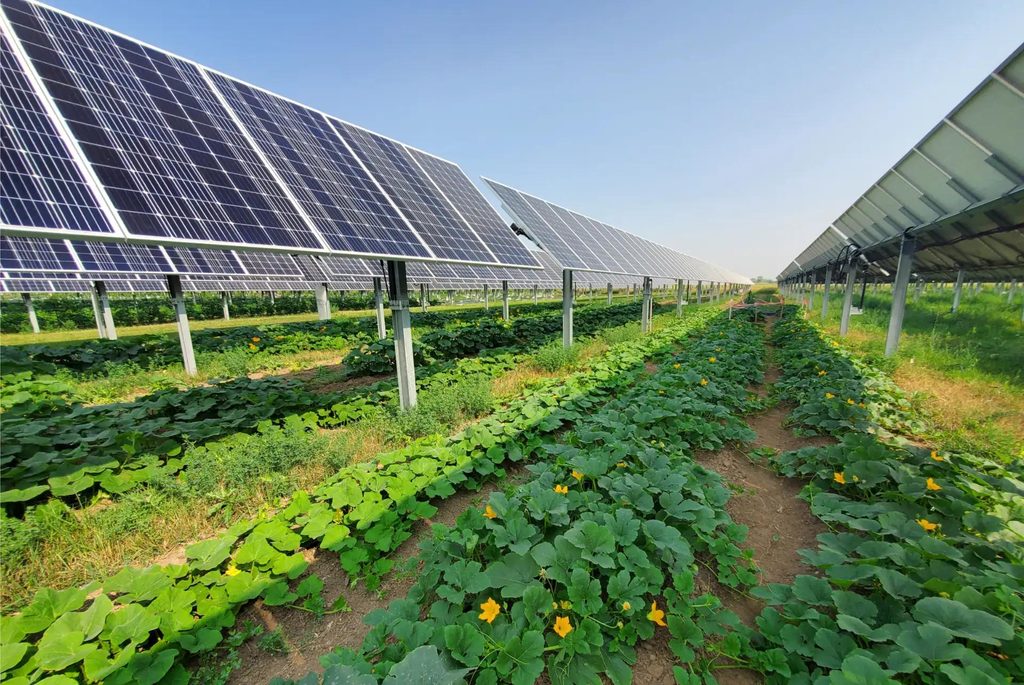
In these systems, solar panel height, tilt, spacing between rows and light transmission are adjusted to create suitable conditions for agricultural production underneath or alongside the panels.The central idea is to use land for more than one productive purpose. Instead of evaluating a parcel of land solely by its agricultural yield or electricity generation, agrivoltaics considers the combined output of both.Researchers frequently use the Land Equivalent Ratio (LER) to evaluate the land-use efficiency of agrivoltaic systems. LER compares the combined productivity of agricultural and photovoltaic production on a shared land area with the amount of land required to produce the same outputs separately.An LER greater than 1 generally indicates that the combined system uses land more efficiently than separate agricultural and solar installations, under the assumptions used in the calculation.However, higher land-use efficiency is not guaranteed in every system. It depends on crop selection, panel configuration, local climatic conditions, agricultural management and electricity production.
Can solar panel shade benefit crops instead of harming them?
One of the most important scientific questions surrounding agrivoltaics is how partial shading affects crop growth and productivity. Different crops have different light requirements, and their responses to reduced sunlight vary considerably.
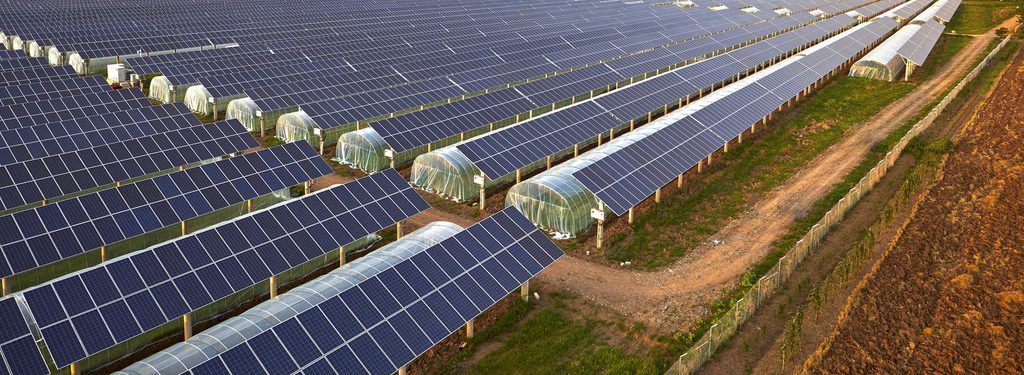
Solar panels can alter soil temperature, moisture retention, evaporation rates and the microclimate surrounding crops. Under hot and dry conditions, partial shading may reduce excessive heat stress and slow soil moisture loss, potentially benefiting certain crops.On the other hand, insufficient sunlight may reduce photosynthesis, plant growth, flowering, fruit development and yield in crops that require high light intensity.A systematic review published in Renewable and Sustainable Energy Reviews in 2024 examined the potential of agrivoltaics for combined electricity and food production. The findings highlight that crop performance under agrivoltaic systems depends significantly on crop species, climate, system design and management. Rather than relying on a universal shading threshold, crop-specific light requirements, including Daily Light Integral (DLI), are important considerations when designing agrivoltaic systems.Some crops may perform reasonably well under partial shading, while others may experience yield reductions. Therefore, selecting crops based on their light requirements and local environmental conditions is essential
A systematic review published in 2025 also examined the effects of agrivoltaic systems on microclimate and water-use efficiency. In some studies, improvements in water-use efficiency of approximately 20–47% and reductions in air and soil temperature of around 1–4°C were reported. These findings, however, are context-dependent and should not be interpreted as universal outcomes for all crops, climates or agrivoltaic designs
For Bangladesh, with its hot summers, humid climate, monsoon rainfall and seasonal agricultural patterns, these potential benefits deserve further investigation through locally designed field trials.
Agrivoltaics in Bangladesh: From research to field implementation
Bangladesh has already taken an important step toward exploring agrivoltaics through a field-based initiative in Sholdhara village, Ghior Upazila, Manikganj
The project involves collaboration among the BRAC Institute of Governance and Development (BIGD), the Department of Electrical and Electronic Engineering at BRAC University and Bright Green Energy Foundation (BGEF). Project-related publications also describe support associated with BRAC’s Climate Change Programme and H&M Foundation.The initiative aims to evaluate the technical and economic feasibility of integrating agriculture with solar electricity generation. Different solar panel configurations are being examined to investigate variations in shading, agricultural productivity, electricity generation and structural investment costs.The broader objective is to develop an evidence-based business model that can help determine appropriate agrivoltaic designs for different crops and agricultural regions in Bangladesh.
Rice cultivation is particularly important in the context of Bangladesh because many farming households depend on rice not only as a marketable crop but also as a primary source of household food security.The project therefore considers agricultural arrangements that can accommodate rice cultivation, alongside the exploration of shade-tolerant varieties and other potentially suitable crops.Beyond rice, crops such as tomatoes, strawberries, dragon fruit, onions, garlic, coriander and various leafy vegetables may also be investigated for their suitability under different agrivoltaic configurations. Their performance would depend on sunlight availability, soil conditions, market demand, seasonality and cultivation practices.
Agrivoltaics as an economic opportunity for farmers
The long-term success of agrivoltaics in Bangladesh will depend not only on electricity generation but also on whether the system provides economic benefits to farmers, investors and energy consumers.Traditional solar projects may require land acquisition or long-term land leasing. These arrangements can create challenges involving land ownership, local land-use rights, compensation, disputes, negotiations and project delays. Agrivoltaics could potentially offer alternative land-sharing arrangements that allow farmers to retain agricultural activities while participating in renewable energy production.
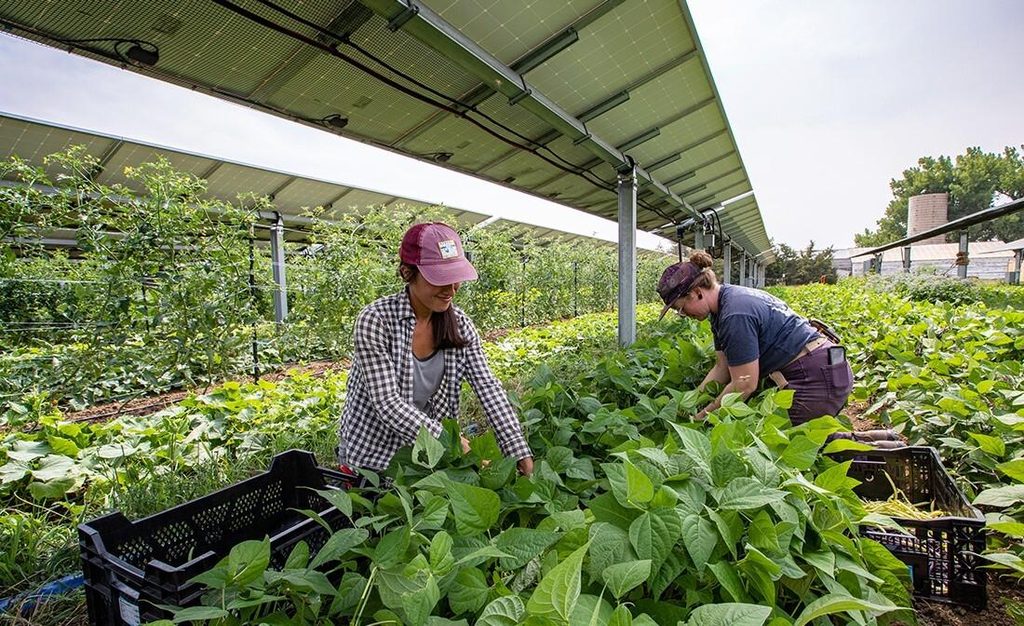
Several possible business models could be explored:- Land leasing model: Farmers provide land for the solar infrastructure while retaining clearly defined rights to continue farming.- Revenue-sharing model: Agricultural and electricity revenues are shared between landowners, farmers and project operators under agreed contractual arrangements.- Cooperative-based model: Groups of farmers collectively participate in land management, agricultural production and solar electricity generation.- Solar irrigation and grid integration model: Electricity is used for irrigation and agricultural operations, while surplus power can potentially be supplied to the electricity grid or other consumers.For these arrangements to work effectively, contracts must clearly address agricultural rights, crop-related risks, revenue distribution, electricity generation, investment costs and the long-term responsibilities of each stakeholder.Agrivoltaics may also create opportunities for rural employment, agricultural diversification and more efficient utilization of land resources, although these benefits need to be assessed through real-world economic studies.
Integrating agriculture, irrigation and electricity supply
Energy is an essential input in Bangladesh’s agricultural production, particularly for irrigation. Farmers rely on electricity and diesel-powered pumps to irrigate crops, and fluctuations in fuel prices or supply can increase production costs.
Agrivoltaic systems could potentially support agricultural irrigation by supplying electricity directly to irrigation pumps. This may help reduce dependence on diesel and potentially lower operational costs, depending on the system design, financing and energy availability.However, if solar electricity is used exclusively for irrigation, the energy system may not generate sufficient revenue throughout the year, particularly when irrigation demand is seasonal.Integrating agrivoltaics with grid connectivity, agricultural processing facilities, local industries and other electricity consumers could provide additional opportunities for utilizing generated electricity beyond irrigation seasons.The agrivoltaic initiative in Manikganj is also exploring electricity utilization for irrigation and grid supply, according to project-related publications. This approach could potentially improve the economic viability of solar infrastructure by combining agricultural production with multiple electricity-use pathways.
Challenges and limitations of agrivoltaics
Despite its potential, agrivoltaics is not a universal solution. Without appropriate planning and system design, it may create new agricultural, environmental and economic challenges.
1. Crop-specific light requirementsNot all crops are suitable for partial shading. Crop selection must consider light requirements, growth stages, seasonal patterns and expected yield under reduced sunlight.
2. Higher infrastructure costsElevated solar structures, wider panel spacing, stronger structural components and adequate space for agricultural machinery may increase construction costs compared with conventional solar installations.
3. Agricultural machinery and managementThe system must accommodate machinery, irrigation, drainage, harvesting operations, labour movement and other agricultural activities without significantly disrupting farming practices.
4. Climate and natural disaster risksBangladesh faces cyclones, flooding, heavy rainfall, waterlogging and lightning. Solar structures must be designed to withstand local environmental conditions, particularly in coastal areas where wind exposure and salinity can create additional challenges.
5. Farmers’ rights and social acceptanceFarmers must be involved in project planning and decision-making. Transparent contracts, land-use arrangements, revenue-sharing mechanisms and protection of agricultural rights are essential to ensure that agrivoltaics benefits rural communities rather than disproportionately benefiting project developers.
6. Limited long-term local evidenceAgrivoltaics remains an emerging field in Bangladesh. Long-term research is needed across different agricultural regions, soil types, crop varieties and seasonal conditions. Monitoring agricultural yields, electricity production, soil properties, water-use efficiency, investment costs and socioeconomic impacts will be critical.International research has also highlighted the importance of long-term environmental monitoring, economic assessment, regional adaptation and experimental validation for improving agrivoltaic system design.
Agrivoltaics and the future of Bangladesh’s energy and food systems
Bangladesh’s energy security, food security, agricultural livelihoods and climate resilience are increasingly interconnected. Expanding solar electricity generation at the cost of agricultural land and rural livelihoods could create additional economic, environmental and social challenges in the long term.Agrivoltaics offers an alternative approach to land-use planning by integrating agricultural production, renewable electricity generation and potentially irrigation infrastructure within the same land area. It could help improve land-use efficiency, diversify farmers’ income sources and support the transition toward cleaner energy.However, its success in Bangladesh will depend on scientific research, locally appropriate system designs, supportive policies, investment mechanisms, agricultural expertise and meaningful participation of farmers.The future of agrivoltaics should not be measured solely by the number of megawatts of electricity generated. It should also be evaluated by how much agricultural production is maintained, how farmers’ livelihoods are protected, how efficiently land and water resources are utilized, and how the system contributes to environmental sustainability.Sustainable development is not simply about generating more electricity or producing more food separately. It is about managing resources in ways that allow food, energy, livelihoods and the environment to become complementary rather than competing priorities.
References and further reading
1. BRAC Institute of Governance and Development (BIGD), BRAC University — Proof-of-Concept Study: Structural Design and Electrical Configuration of the Agrivoltaic System
2. BIGD — Sun and Soil: Exploring Agrivoltaics in Bangladesh
3. National Renewable Energy Laboratory (NREL) — Knowns, Uncertainties, and Challenges in Agrivoltaics
4. Renewable and Sustainable Energy Reviews (2024) — Agrivoltaics, a promising new tool for electricity and food production: A systematic review
5. Renewable and Sustainable Energy Reviews (2025) — Systematic review on the impacts of agrivoltaic systems on microclimate, water-use efficiency and crop yield
6. FAO — Energy resources and definitions7. The Business Standard — Agrivoltaics: An integrated renewable energy solution for Bangladesh’s growing energy needs